A sufficiently detailed spec is code

This post is essentially this comic strip expanded into a full-length post: For a long time I didn’t need a post like the one I’m about to write. If someone brought up the idea of generating code from specifications I’d share the above image with them and that would usually do the trick. However, agentic […]
Cook: A simple CLI for orchestrating Claude Code
~*~ ~*~ ~*~ Workflow loops for Claude Code, Codex, and OpenCode. cook ”Implement dark mode” review cook ”Implement dark mode” x3 cook ”Implement dark mode” v3 ”least code” cook ”Auth with JWT” vs ”Auth with sessions” pick ”best security” cook ”Work on next task in plan.md” review ralph 5 ”DONE if all tasks complete, else […]
Autoresearch for SAT Solvers

_ _ ____ _ _____ / __ _ ___ _ __ | |_/ ___| / |_ _| / _ / _` |/ _ ’_ | _____ / _ | | / ___ (_| | __/ | | | |_ ___) / ___ | | /_/ ___, |___|_| |_|__|____/_/ __| |___/ An autonomous AI agent that […]
Austin’s surge of new housing construction drove down rents

After decades of explosive growth, Austin, Texas, in the 2010s was a victim of its own success. Lured by high-tech jobs and the city’s hip reputation, too many people were competing for too few homes. From 2010 to 2019, rents in Austin increased nearly 93%—more than in any other major American city. And home sale […]
RX – a new random-access JSON alternative

REXC encoder, decoder, and data tool. Drop-in replacements for JSON.stringify and JSON.parse that produce smaller output, skip deserialization on read, and create near-zero heap allocations. JSON forces a tradeoff: parse everything up front (slow, memory-heavy) or don’t cache at all. REXC eliminates the tradeoff: 18x smaller — binary-encoded numbers, de-duplicated strings, shared schemas, prefix-compressed paths. […]
Linking Smaller Haskell Binaries (2023)
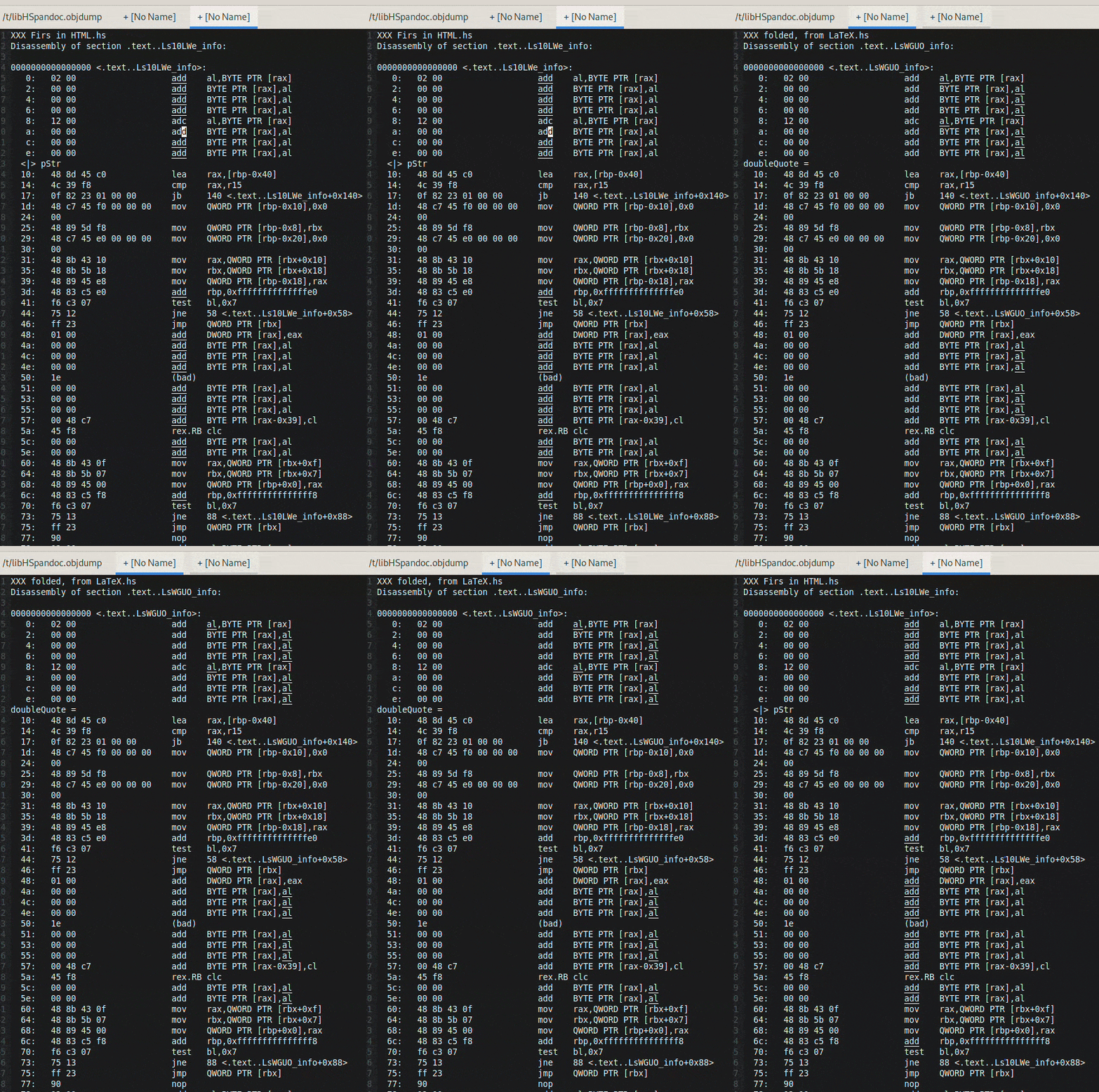
Publish date: Jan 7, 2023 Last updated: Jan 8, 2023 Haskell binaries can get quite large (think ~100MB), especially for projects with many transitive dependencies. Here are two strategies that can help at link time, the latter being more experimental. I used the test-pandoc binary from pandoc on GHC 9.2.5 below. This was nice because […]
How many branches can your CPU predict?
Modern processors have the ability to execute many instructions per cycle, on a single core. To be able to execute many instructions per cycle in practice, processors predict branches. I have made the point over the years that modern CPUs have an incredible ability to predict branches. It makes benchmarking difficult because if you test […]
Show HN: Duplicate 3 layers in a 24B LLM, logical deduction .22→.76. No training

I replicated Ng’s RYS method and found that duplicating 3 specific layers in Qwen2.5-32B boosts reasoning by 17% and duplicating layers 12-14 in Devstral-24B improves logical deduction from 0.22→0.76 on BBH — no training, no weight changes, just routing hidden states through the same circuit twice. Tools included. Two AMD GPUs, one evening. Duplicate 3 […]
A look at content scrambling in DVDs
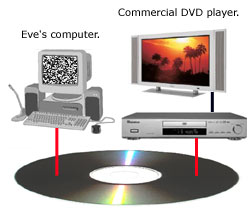
Cryptography in Home Entertainment – A look at content scrambling in DVDs Cryptography in Home EntertainmentA look at content scrambling in DVDs By Mark BarryJune 2004 Introduction Did you know that every time you watch a DVD, a simple cryptosystem is at work behind the scenes? A cryptosystem, while watching DVDs? Why would anyone […]
ZJIT removes redundant object loads and stores

Intro Since the post at the end of last year, ZJIT has grown and changed in some exciting ways. This is the story of how a new, self-contained optimization pass causes ZJIT performance to surpass YJIT on an interesting microbenchmark. It has been 10 months since ZJIT was merged into Ruby, and we’re now beginning […]