Beam: Reflection’s 501B open-weight model

reflection.ai

beam:-reflection’s-501b-open-weight-model

We are introducing Beam, Reflection’s first open-weight model. Beam is a sparse Mixture-of-Experts model with 501 billion total parameters, 23 billion active, built for coding, reasoning, and agentic workloads. Beam’s capabilities come from major investments in both pretraining and reinforcement … Read more


Questions for Believers in AI Consciousness

endsdontjustifythemeans.com
questions-for-believers-in-ai-consciousness

This weekend, I had been intending to start writing a careful and comprehensive ‘how to argue against the people who believe AI is conscious’ piece. But, at this very minute, everyone is going crazy on the internet shouting at each … Read more

OpenAI “rogue” agent activities found on Wikimedia projects

diff.wikimedia.org
openai-“rogue”-agent-activities-found-on-wikimedia-projects

Recently, multiple organisations have disclosed how clusters of so-called “rogue” AI agents attempted to break into websites and online services, sometimes successfully. Agents from OpenAI’s environment, in particular, are known to have used other public wikis (collaboratively edited websites not … Read more

Benchmark in Milliseconds

matklad.github.io

Benchmark In Milliseconds matkladAboutLinksBlogroll Oct 5, 2026 How long should a micro benchmark run? My rule of thumb is to tweak the input size until the benchmark takes about 300ms, for the following reasons: Milliseconds are integers ranging from 1 … Read more

Borland Turbo Basic

dosdays.co.uk
borland-turbo-basic

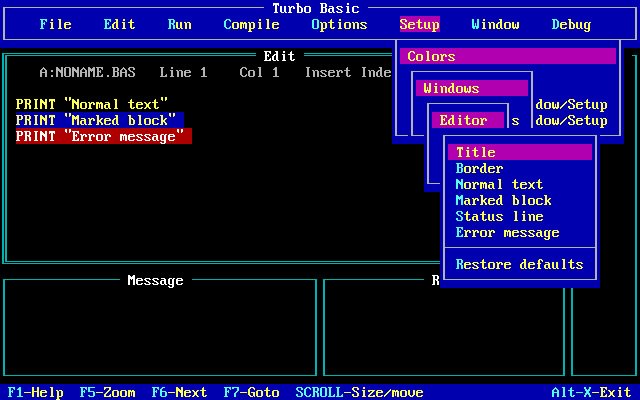
Turbo BASIC Turbo BASIC started life as BASIC/Z and written by Robert “Bob” Zale. It was the first interactive compiler running on the CP/M operating system, but in 1987, Borland purchased it and published it for MS-DOS. It was sold … Read more

Making a GTK application in Haskell, part 1

floreal.tech
making-a-gtk-application-in-haskell,-part-1

In this series, we are going to build a todo-list application using Haskell, GTK 4, and the Adwaita library. Adwaita will provide us with many useful widgets and styles. Let’s dive in! This series’ intended audience is intermediate Haskellers, with … Read more